+55 21 3197-4219
Ranked 130th out of 163 countries in the Global Peace Index, security is a critical issue in Brazil, both for citizens and businesses. In recent years, Artificial Intelligence (AI) has emerged as a key tool to reinforce threat prevention and improve law enforcement responsiveness. Brazil has also made clear its ambition to position itself as a leader in this field across Latin America.
The field of security is not immune to the upheaval brought about by the arrival of AI, and the sector is undergoing renewal, particularly because AI itself is being used for criminal purposes. In Mexico, for example, some cartels in the south of the country use artificial intelligence to falsify documents, automate extorsion schemes, improve money laundering and produce recruitment propaganda for socials medias
The Brazilian AI Strategy (2021)[1] identifies security — public and private — as a priority. Adopted by the government after a public consultation, the document sets out guidelines for AI use, aligned with OECD principles. In this context, AI enables authorities to better anticipate crime while providing organizations with advanced solutions to safeguard their infrastructures and data.
[1] The document was developed after a public consultation (December 2019 to March 2020), international comparative studies, and expert assistance – approximately 1,000 contributions were received.
AI and public security
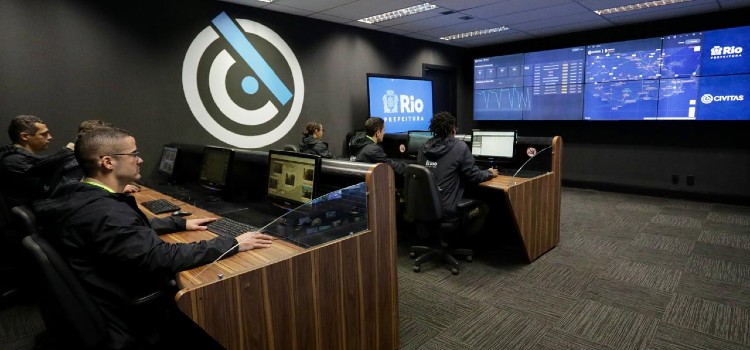
AI applied to public security covers key areas: predictive analysis of crime data, smart video surveillance, and crisis management. In São Paulo, for instance, the civil police use analytics platforms (such as the SMART-SAMPA), combining crime records with urban data to identify hot spots and anticipate patrols.
Urban camera systems also integrate license plate scanning, facial recognition, and behavioral analysis algorithms to detect suspicious activity in real time (fights, intrusions, etc.). Other applications include AI-equipped drones monitoring risk areas (fires, hazardous spills, unauthorized protests) and coordinating emergency responses[2]. The benefits are clear: faster interventions, better allocation of police resources and less aggressive interventions.
[2] It is worth noting, however, that drones cannot fly over communities controlled by factions: once they enter the area, they are brought down and retrieved.
AI and corporate security
The AI revolution also benefits companies and private institutions. Beyond generative AI tools — such as Perplexity, Maltego, Claude, or ChatGPT — used for report synthesis and strategic monitoring, cybersecurity is being strengthened. Machine learning algorithms detect anomalies in network traffic, phishing attempts, or malware, isolating threats before they spread.
For businesses, background checks and due-diligence are essential to ensure the viability of transactions, particularly via social networks. AI also enhances fraud prevention: by continuously analyzing billions of transactions, it identifies suspicious operations (unusual payments, identity theft).
In physical security, modern access control systems use facial or voice recognition to authorize only approved staff, while keeping audit records. Industrial facilities and corporate headquarters deploy smart cameras that automatically detect intrusions or incidents (accidents, break-ins) and send instant alerts. These solutions improve surveillance efficiency while reducing the workload of security teams.
The role of security consulting firms
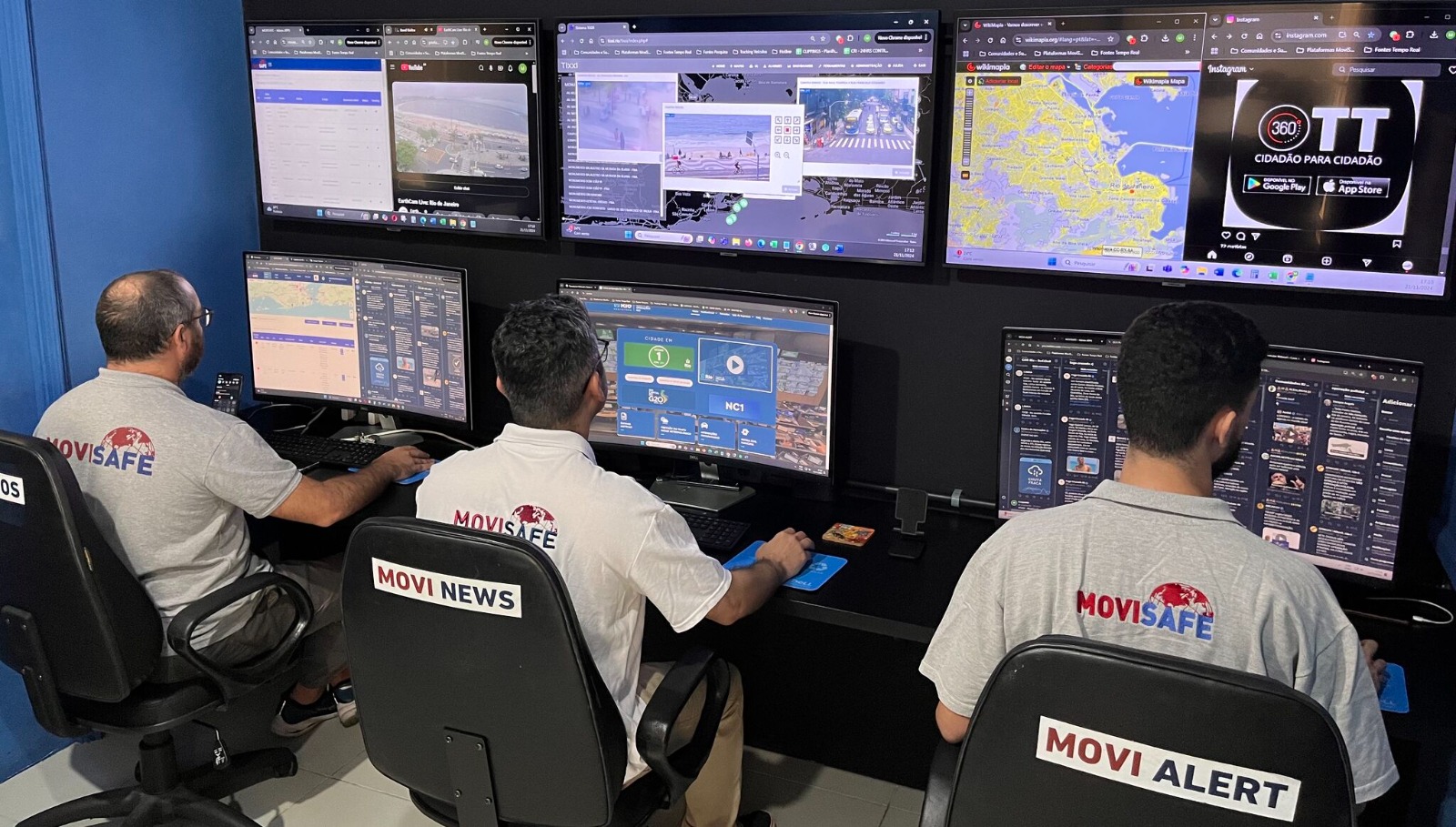
Consulting firms play a crucial role in this transformation. They conduct audits, assess risks (cyberattacks, physical threats, internal risks), and propose tailored solutions integrating AI. At MOVISAFE, we work hand in hand with new technologies and continuously train our teams to best address client needs. Processing larger data volumes allows us to anticipate vulnerabilities and recommend tailored reinforcements (technologies, training, protocols). This approach, combining human expertise and innovative technology, helps clients be proactive, optimize budgets, and strengthen resilience.
Ethical and geopolitical challenges
Despite its benefits, AI in security raises major challenges. Data protection in Brazil is governed by the LGPD law (2018), which imposes safeguards on personal data use. It is essential that AI systems respect privacy (e.g., anonymizing video, limiting storage periods) and ensure transparency to avoid discriminatory biases.
AI also raises questions of digital sovereignty. In São Paulo, several facial recognition projects rely on Russian software, such as FindFace by NtechLab, integrated by private consortia. This technological dependence is concerning, especially given the lack of transparency in public contracts regarding server hosting and access to biometric databases.
Moreover, AI will not replace private security operators but will support their work. Informal intelligence — networking, police and military contacts — remains crucial. Similarly, risk assessments and security reports still require on-site human investigation.
Economic outlook
Brazil’s security market is highly dynamic: banks, industries, healthcare institutions, and government agencies are increasing their investments in AI. The State supports this trend with public-private partnerships and innovation programs. Recent studies forecast rapid growth, driven by technological advances and rising demand for smart solutions.
Conclusion
The adoption of AI in security is a major advantage for Brazil, both in the public and private sectors. AI technologies enable greater precision and responsiveness in risk prevention. For organizations, relying on experienced partners — such as MOVISAFE — strengthens operational confidence and resilience against threats. The future of security in Brazil will undoubtedly be shaped by the synergy between human expertise and AI capabilities, serving the protection of all.